
Digital marketing and why your business needs it can be explained simply: it is the use of online channels, digital platforms and measurable campaigns to attract, educate, convert and retain customers.
Today, customers use search engines, websites, social media, email, online reviews, marketplaces, mobile devices and digital content before deciding who to trust. A business that is not visible in those places may lose attention to competitors who are easier to find, understand and contact.
Digital marketing helps your business build awareness, generate leads, increase sales, improve customer relationships and measure what works. It is not only for large companies. Small businesses, service providers, online stores, consultants, course creators and local brands can all use digital marketing to reach the right audience more consistently.
This guide explains what digital marketing means, the major channels involved, why it matters, how it supports business growth and how to start with a practical strategy.
Quick answer
Digital marketing is the process of promoting a business, product or service through online channels such as websites, SEO, social media, email, paid ads, content, video and analytics. Your business needs it because customers now research, compare and make decisions online before contacting or buying from a company.
Digital marketing is not just posting online
Posting randomly on social media is not a complete digital marketing strategy. A strong strategy connects your website, content, SEO, email, social media, paid campaigns, analytics and customer journey.
What Is Digital Marketing?
Digital marketing is the promotion of products, services or brands using digital channels and online technologies.
It can include:
- Business websites
- Search engine optimization
- Search engine advertising
- Social media marketing
- Email marketing
- Content marketing
- Video marketing
- Influencer marketing
- Affiliate marketing
- Online reviews
- Analytics and conversion tracking
The purpose is not only to get attention. Effective digital marketing moves people from awareness to trust, then from trust to enquiry, purchase, booking or long-term relationship.
Simple example
A customer searches for a service on Google, finds a helpful blog post, visits the company website, reads testimonials, signs up for an email guide and later books a consultation. That entire journey can be supported by digital marketing.
Traditional Marketing vs Digital Marketing
Traditional marketing uses channels such as print, radio, television, billboards, flyers and direct mail. Digital marketing uses online platforms and digital tools.
| Area | Traditional Marketing | Digital Marketing |
|---|---|---|
| Channels | Print, radio, TV, outdoor ads | Websites, search, social, email, ads |
| Measurement | Often harder to track precisely | Can track clicks, leads, sales and behaviour |
| Targeting | Broad audience targeting | More specific audience targeting |
| Speed | Campaign changes can be slow | Campaigns can be adjusted quickly |
| Cost control | Often fixed upfront costs | Flexible budgets and testing options |
| Customer interaction | Usually one-way communication | Two-way engagement and feedback |
Both can work. The difference is that digital marketing usually gives businesses more visibility into what people do after seeing the message.
Why Your Business Needs Digital Marketing
Your business needs digital marketing because customer attention has moved online.
Customers research before they buy
People often compare options before making decisions. They may check your website, search your business name, read reviews, browse your social media pages, watch videos or compare your offer with competitors.
Competitors are already visible
If competitors appear in search results, social feeds, email inboxes and online ads while your business is absent, customers may not even know you exist.
Trust is built before contact
A professional website, clear content, helpful articles, social proof and consistent branding can make customers feel more confident before they speak with you.
Marketing becomes measurable
Digital marketing allows you to measure traffic, clicks, conversions, enquiries, purchases, cost per lead and campaign performance.
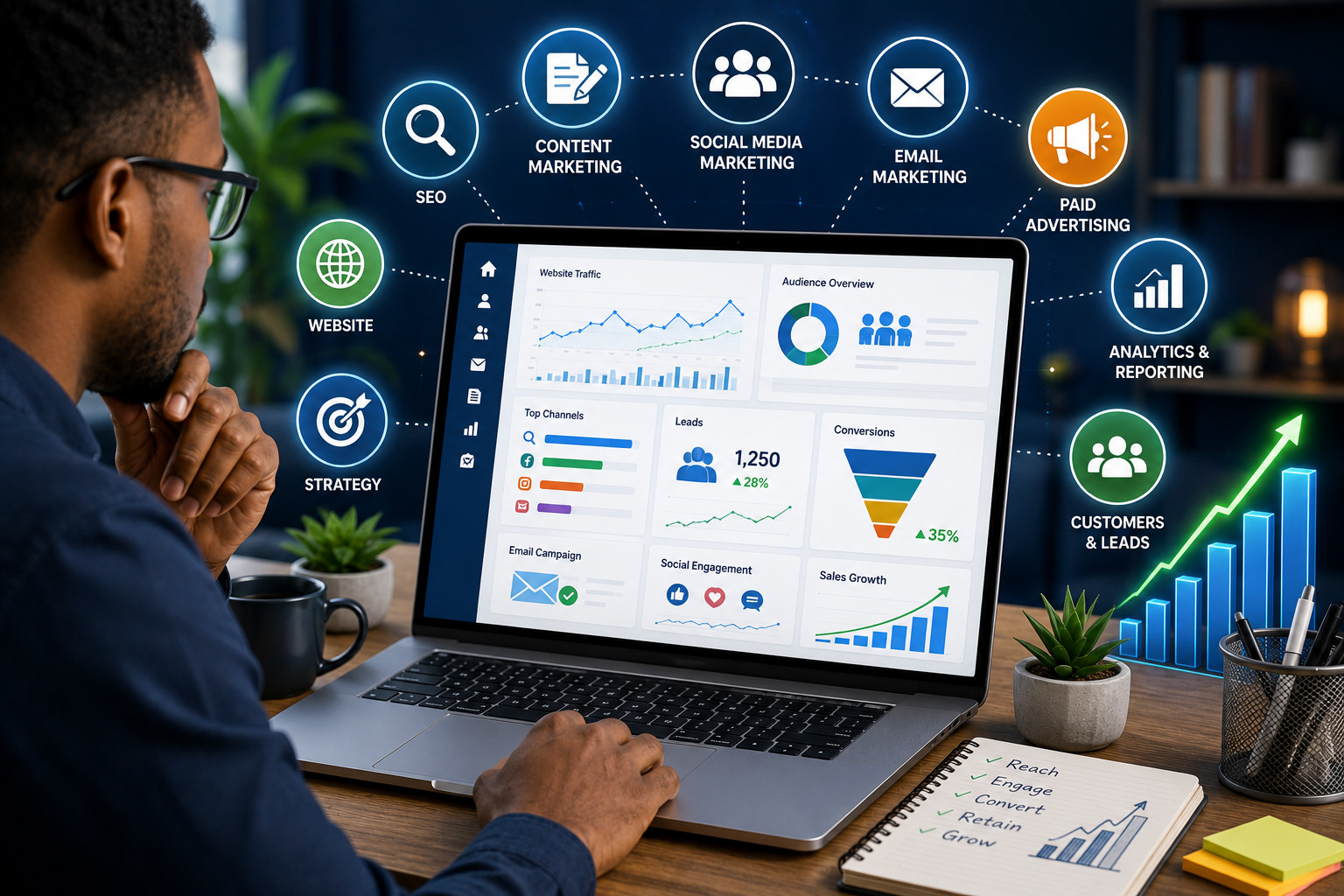
Main Digital Marketing Channels
Digital marketing is made up of several channels. You do not need to use all of them at once. The right combination depends on your audience, budget, goals and industry.
Common channels include:
- Website marketing
- SEO
- Content marketing
- Social media marketing
- Email marketing
- Paid advertising
- Video marketing
- Local search marketing
- Affiliate marketing
- Marketing automation
- Analytics and reporting
1. Your Website as the Foundation
Your website is usually the centre of your digital marketing strategy.
Social media platforms can change rules, reduce reach or suspend accounts. Paid ads stop when the budget stops. But your website gives your business a controlled online home where customers can learn, compare, enquire and buy.
A strong business website should include:
- Clear explanation of what you offer
- Professional design
- Mobile-friendly layout
- Fast loading speed
- Service or product pages
- Contact forms
- Calls to action
- Testimonials or proof
- SEO-friendly structure
- Privacy and legal pages
Before investing heavily in ads, make sure your website is ready to convert visitors into leads or customers.
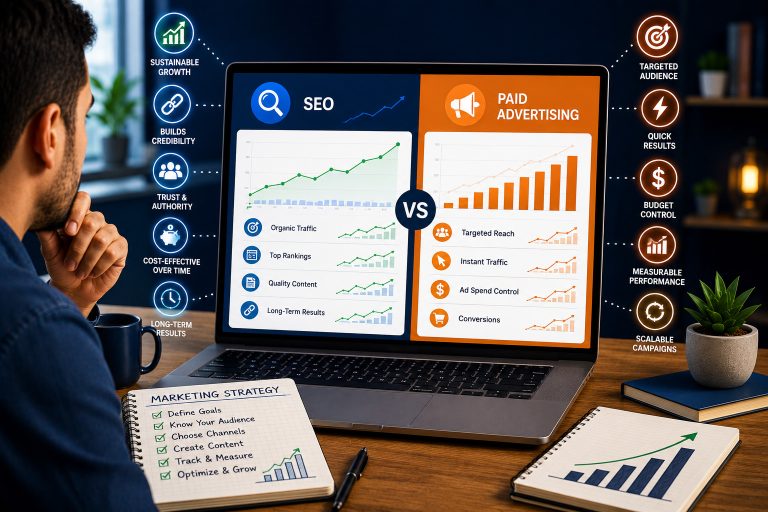
2. Search Engine Optimization
Search engine optimization, or SEO, helps your website appear in search results when people look for relevant topics, services or products.
SEO includes:
- Keyword research
- Helpful content
- Technical website structure
- Fast page speed
- Mobile usability
- Internal linking
- Image alt text
- Meta titles and descriptions
- Backlinks
- Local business listings
Why SEO matters
People searching online often have clear intent. If your website answers their question or offers the solution they need, SEO can bring steady long-term traffic.
SEO principle
Do not write only for search engines. Create content that genuinely helps people understand, decide or solve a problem.
3. Content Marketing
Content marketing means creating useful information that attracts and educates your audience.
Content can include:
- Blog posts
- Guides
- Case studies
- Videos
- FAQs
- Templates
- Checklists
- Email newsletters
- Webinars
- Social media posts
How content helps your business
Good content builds authority. It shows that your business understands customer problems and can provide a solution.
For example, a website design agency can publish articles on website speed, SEO, platform comparisons, website security and online business growth. These articles can attract business owners who need professional help.
4. Social Media Marketing
Social media marketing helps businesses build visibility, engagement and community across platforms where their audience spends time.
Common platforms include:
- TikTok
- X
- YouTube
What social media can do
- Increase brand awareness
- Share educational content
- Promote offers
- Show social proof
- Build community
- Drive traffic to your website
- Support customer communication
Social media works best when it is connected to a larger strategy instead of being used only for random posts.
5. Email Marketing
Email marketing helps you communicate directly with people who have chosen to hear from your business.
Email can be used for:
- Welcome messages
- Newsletters
- Product updates
- Course launches
- Promotional offers
- Customer education
- Cart recovery
- Lead nurturing
- Re-engagement campaigns
Why email is valuable
Unlike social media reach, email gives you a more direct line to your audience. It is useful for building trust over time and converting leads who are not ready to buy immediately.
6. Paid Advertising
Paid digital advertising allows businesses to pay for visibility on platforms such as search engines, social media networks, websites and video platforms.
Common paid ad types include:
- Search ads
- Display ads
- Social media ads
- Video ads
- Shopping ads
- Retargeting ads
- Sponsored content
When paid ads are useful
Paid ads can be useful when you need faster visibility, want to test an offer, promote a launch or reach a specific audience.
Paid ads need a strong destination
Sending traffic to a weak website or unclear landing page wastes money. Before running ads, make sure your page has a clear offer, strong call to action and a simple conversion path.
7. Video Marketing
Video marketing helps explain ideas quickly and build a stronger human connection with your audience.
Businesses can use video for:
- Product demonstrations
- Tutorials
- Customer stories
- Behind-the-scenes content
- Educational tips
- Webinars
- Sales-page videos
- Social media reels
Video is especially useful when your product or service benefits from explanation, demonstration or personal trust.
8. Local Digital Marketing
Local digital marketing helps businesses attract customers in specific cities, regions or service areas.
Local marketing can include:
- Google Business Profile
- Local SEO
- Location pages
- Customer reviews
- Map visibility
- Local ads
- Local landing pages
- Community content
This is useful for businesses such as clinics, restaurants, real estate agents, contractors, salons, schools and service providers.
9. Analytics and Measurement
Analytics helps you understand what is working and what needs improvement.
You can measure:
- Website visitors
- Traffic sources
- Popular pages
- Search queries
- Form submissions
- Phone clicks
- Email signups
- Sales
- Ad performance
- Conversion rates
Why measurement matters
Without measurement, marketing becomes guesswork. Analytics shows which channels bring attention, which pages convert and where customers drop off.
Digital Marketing and the Customer Journey
Digital marketing should support every stage of the customer journey.
| Stage | Customer Question | Marketing Support |
|---|---|---|
| Awareness | What is my problem? | Blog posts, videos, social content, ads |
| Consideration | What are my options? | Guides, comparisons, case studies, email education |
| Decision | Who should I choose? | Service pages, testimonials, offers, consultations |
| Purchase | How do I buy or contact? | Checkout, booking forms, contact pages, sales calls |
| Retention | Why should I return? | Email, support, loyalty, updates, community |
Benefits of Digital Marketing for Businesses
1. Better online visibility
Digital marketing helps people discover your business through search, social media, ads, referrals and content.
2. More targeted reach
You can focus on specific audiences based on location, interests, search intent, behaviour or customer stage.
3. Measurable results
You can track traffic, leads, sales and other actions instead of guessing whether campaigns worked.
4. Stronger customer trust
Helpful content, professional branding, reviews and consistent communication build confidence.
5. Cost control
Digital campaigns can start small, be tested and then scaled based on results.
6. Long-term growth
SEO, content and email lists can continue supporting the business long after a campaign begins.
Common Digital Marketing Mistakes
- Marketing without a clear goal
- Using too many channels at once
- Ignoring the website
- Posting without strategy
- Not tracking conversions
- Targeting the wrong audience
- Copying competitors blindly
- Using weak landing pages
- Ignoring email marketing
- Expecting instant SEO results
- Running ads without testing
- Not reviewing analytics
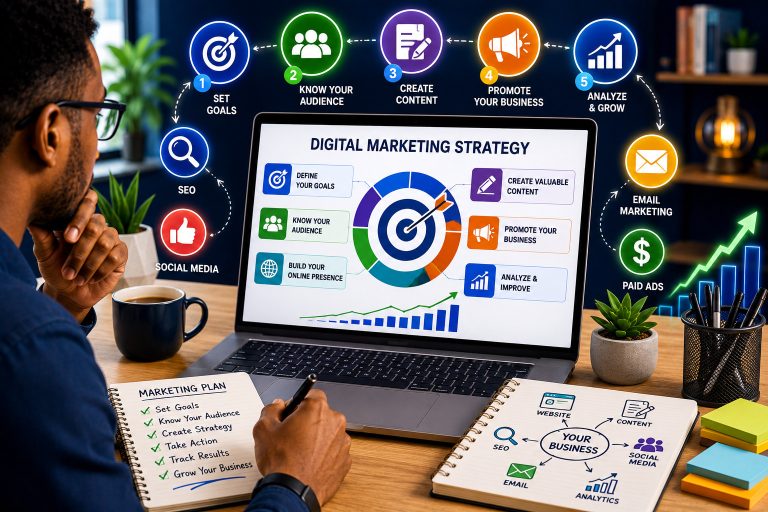
How to Create a Digital Marketing Strategy
Step 1: Define your goal
Decide whether you want more leads, sales, bookings, subscribers, course enrolments, brand awareness or customer retention.
Step 2: Understand your audience
Identify who you want to reach, what they need, where they spend time and what problems they want solved.
Step 3: Improve your website
Make sure your website is fast, clear, mobile friendly and ready to convert visitors.
Step 4: Choose your main channels
Start with the channels most likely to reach your audience. Avoid trying to master everything at once.
Step 5: Create useful content
Publish content that answers real customer questions and supports your services or products.
Step 6: Capture leads
Use contact forms, consultations, email signups, downloads or offers to convert visitors into leads.
Step 7: Measure results
Track what brings traffic, enquiries and sales. Improve based on data.
Step 8: Keep improving
Digital marketing is ongoing. Review performance regularly and refine your message, website and campaigns.
Useful Digital Marketing Tools
Website and SEO tools
- Google Search Console
- Google Analytics
- Rank Math or similar SEO plugins
- Keyword research tools
- Website speed testing tools
Content and design tools
- Canva
- Google Docs
- AI writing assistants
- Video editing tools
- Image compression tools
Email and automation tools
- Email marketing platforms
- CRM tools
- Marketing automation platforms
- Newsletter tools
Social and advertising tools
- Meta Business Suite
- LinkedIn Campaign Manager
- Google Ads
- Scheduling tools
- Ad reporting dashboards
Digital Marketing Checklist
Foundation
- Clear business goals
- Defined target audience
- Professional website
- Mobile-friendly design
- Fast website speed
- Clear service pages
- Strong calls to action
- Analytics installed
- Search Console connected
- Lead capture in place
Growth channels
- SEO strategy
- Content plan
- Social media plan
- Email list
- Paid advertising plan
- Retargeting strategy
- Review collection process
- Conversion tracking
- Monthly reporting
- Regular improvement plan
Final Verdict: What Is Digital Marketing and Why Does Your Business Need It?
Digital marketing and why your business needs it comes down to visibility, trust, measurement and growth.
Digital marketing helps your business appear where customers are already searching, scrolling, watching, comparing and deciding. It connects your website, content, SEO, social media, email, advertising and analytics into a system that attracts attention and turns it into business results.
You do not need to use every digital channel immediately. Start with a strong website, clear messaging, useful content, basic SEO, analytics and one or two channels where your audience is active.
As your business grows, you can add email marketing, paid advertising, video, automation and deeper analytics.
The goal is not to be everywhere online. The goal is to be visible, helpful and trusted in the places that matter most to your customers.
Our recommendation
Start with your website, SEO, content and analytics. Then add social media, email and paid advertising based on your audience, goals and budget.
Frequently Asked Questions
What is digital marketing?
Digital marketing is the use of online channels and digital tools to promote a business, product or service and measure customer actions.
Why does my business need digital marketing?
Your business needs digital marketing because customers research, compare and make decisions online before contacting or buying from a company.
What are the main types of digital marketing?
The main types include SEO, content marketing, social media marketing, email marketing, paid advertising, video marketing and analytics.
Is digital marketing only for online businesses?
No. Offline businesses also need digital marketing because customers use the internet to find local services, read reviews and compare providers.
What is the most important part of digital marketing?
A clear strategy and a strong website are usually the foundation. Other channels should support the customer journey.
How long does digital marketing take to work?
Paid ads can generate faster visibility, while SEO and content marketing usually take longer but can create long-term results.
Do I need SEO for my business?
SEO is important if customers search online for your products, services, solutions or industry information.
Is social media enough for digital marketing?
No. Social media can help, but a complete digital strategy usually also needs a website, content, SEO, email and measurement.
Should small businesses use paid ads?
Paid ads can be useful when the offer, landing page and tracking are ready. Start small and test before increasing the budget.
What is content marketing?
Content marketing means creating helpful articles, videos, guides, emails or resources that attract and educate your target audience.
How do I measure digital marketing success?
Track website traffic, leads, sales, conversion rates, email signups, ad results and customer enquiries.
Can digital marketing help service businesses?
Yes. Service businesses can use digital marketing to attract leads, build trust, explain services and increase bookings or enquiries.
Can digital marketing help online stores?
Yes. Online stores can use SEO, content, ads, email, social media and retargeting to attract visitors and increase sales.
Do I need a blog for digital marketing?
A blog is useful when your customers search for answers, comparisons, guides or educational content related to your products or services.
What should I do first in digital marketing?
Start by improving your website, defining your audience, setting goals, connecting analytics and creating helpful content.
Need Help Growing Your Business Online?
Teemikemedia Agency can help you build a professional website, improve SEO, create digital content, plan campaigns and set up the tools your business needs to grow online.
Helpful references
Use reliable resources such as Google Search Central, Google Analytics Help, Google Skillshop and recognised marketing education resources when learning digital marketing fundamentals.